
 Български
 English
 Русский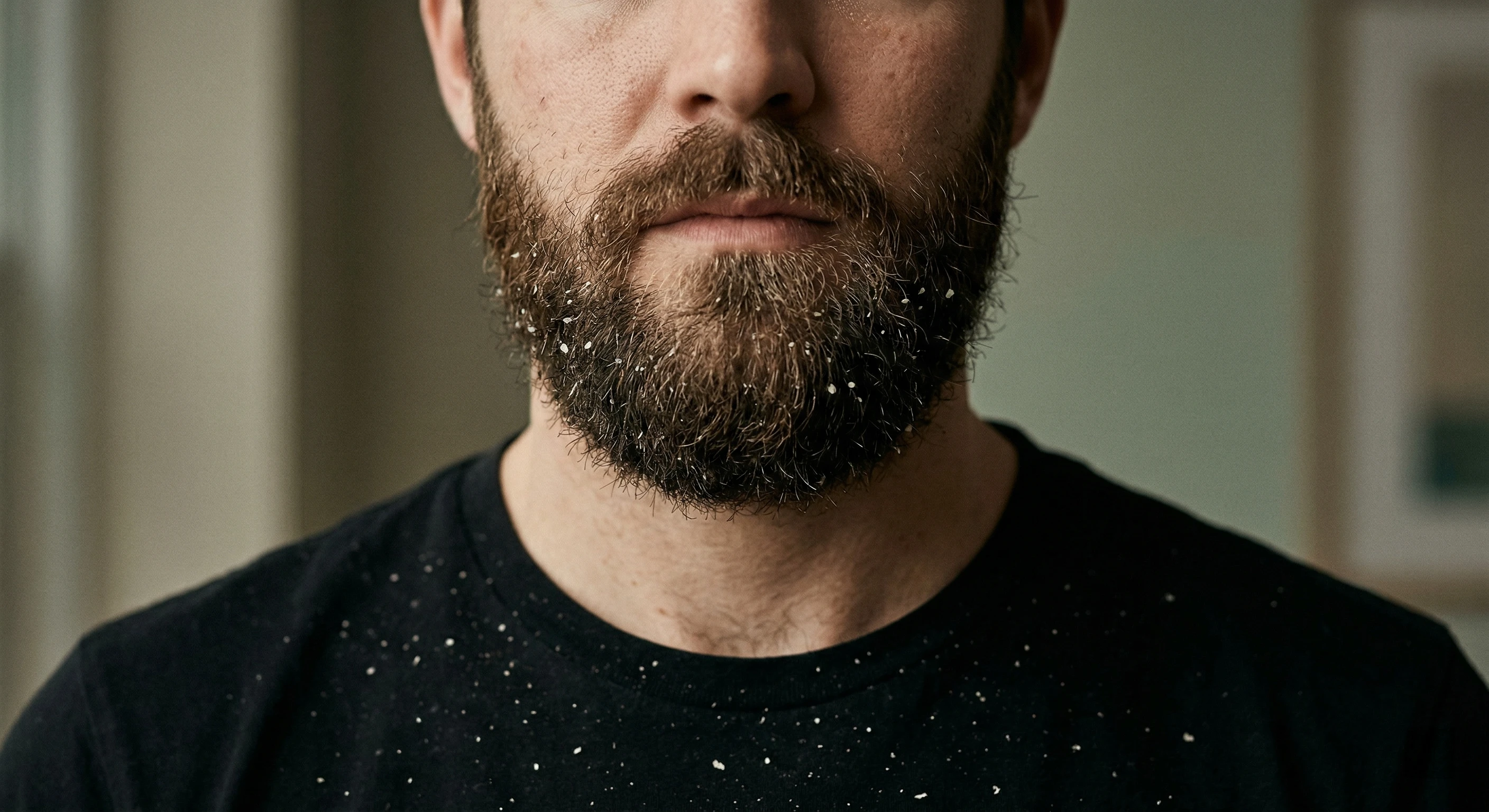
White flakes in your beard can be frustrating, especially when they land on a dark shirt. Gentle cleansing and moisturizing may help dry skin, but persistent beard dandruff can need medical treatment. There is no routine that guarantees clear skin in a week.
The useful first step is to pay attention to the skin underneath the hair. Is it simply dry, or is there also itching, a rash, greasy scale or pain? Those details matter more than buying another bottle of beard oil. This guide covers everyday grooming and when to ask a dermatologist for help; it cannot diagnose a skin condition.
Why the skin under your beard flakes
Dryness and irritation can cause flaking. Another possibility is seborrheic dermatitis, an inflammatory skin condition that can affect the beard area, scalp and other parts of the face. The American Academy of Dermatology (AAD) 🔗 describes beard dandruff with an itchy rash, scaly skin or greasy patches.
DermNet 🔗 explains that the cause of seborrheic dermatitis is not fully understood. Malassezia, a yeast normally found on the skin, is thought to play a role, alongside other factors. That does not mean every flake is caused by yeast or that your beard is dirty.
Flakes alone are not enough to diagnose the cause. If the problem persists, a dermatologist can distinguish between conditions that may need different treatment.
1. Clean gently and reach the skin
For everyday beard care, the AAD recommends washing your face and beard daily with a gentle cleanser suited to your skin type 🔗. For dry or sensitive skin, it recommends suitable fragrance-free options. This is different from prescribing how often to use a medicated shampoo.
- Wet the beard and gently work the cleanser through to the skin with your fingertips.
- Rinse thoroughly with lukewarm water.
- Pat dry with a clean towel, leaving the skin slightly damp before moisturizing.
Follow the product’s instructions, including how long to leave it on the skin. If a product stings or makes irritation worse, stop using it and seek advice if symptoms continue. A “beard” or “sulfate-free” label alone does not tell you whether the whole formula suits your skin.
2. Moisturize according to your skin type
The AAD’s beard-care guidance 🔗 makes different suggestions for different skin types: beard oil for normal to dry skin, beard conditioner for acne-prone skin, and a fragrance-free, non-comedogenic moisturizer for sensitive skin. “Non-comedogenic” means formulated not to clog pores.
Use a small amount and gently distribute it through the hair to the skin. Applying moisturizer after washing, while the skin is slightly damp, helps retain moisture. Moisturizing does not require “opening the pores,” and the amount of oil needed varies with beard length and the product.
Beard oil is a grooming option, not a substitute for treating a rash. If flakes keep returning alongside itching or inflammation, adding more oil may not address the cause.
3. Handle flakes without scrubbing
The AAD’s advice for beard dandruff 🔗 includes gently brushing the beard before washing to loosen scale. It also warns that forceful brushing can irritate the skin and worsen dandruff.
Keep the pressure light. Do not pick at the skin or try to scrub every flake away. If brushing hurts, stop. Pain or broken skin calls for assessment rather than more exfoliation.
A fixed exfoliating schedule is not a treatment for every flaky beard. Advice for preventing ingrown hairs should not be confused with advice for an inflamed rash.
When everyday care is not enough
Seborrheic dermatitis may need targeted treatment. DermNet describes options such as topical antifungal treatments 🔗, chosen according to the affected area and symptoms. A dermatologist can help identify the cause; a pharmacist can explain a product’s label and whether it is suitable for facial use.
Do not assume that any scalp shampoo or steroid cream is appropriate for the skin under your beard. Follow the specific instructions you receive rather than borrowing a medication schedule from a grooming article.
Seek medical advice if flaking or a rash persists, keeps returning, or does not improve with appropriate care. The AAD specifically advises assessment for ongoing beard dandruff with acne-like breakouts, pain or broken skin 🔗. Marked inflammation also deserves attention. You do not need to wait several weeks when those symptoms are present.
How long does improvement take?
It depends on the cause and the care or treatment needed. A barber cannot promise a deadline from the appearance of flakes. DermNet notes that seborrheic dermatitis in adults is often chronic and may require ongoing management.
Look for changes in comfort, itching, redness and flaking rather than counting down to a promised cure. Recurrence does not necessarily mean you failed to care for your beard.
Where a barber can help
A barber can help with the beard’s shape, length and everyday grooming. A skin diagnosis and medical treatment belong with a qualified clinician.
If your skin is comfortable and you want to tidy the outline or discuss a manageable beard shape, see the beard-shaping service in Varna. If the skin is painful, broken or inflamed, get medical advice first.
Common questions about beard dandruff
What causes beard dandruff?
Flaking under a beard can have different causes, including dry or irritated skin and seborrheic dermatitis. Flakes alone cannot tell you which one it is.
How often should I wash my beard?
For everyday care, the American Academy of Dermatology recommends washing the face and beard daily with a gentle cleanser suited to your skin. Medicated products have their own directions; follow the label and medical advice.
Do I need a special beard shampoo?
Choose a gentle cleanser suited to facial skin, whether or not it is marketed specifically for beards. A medicated dandruff product serves a different purpose; check whether it is suitable for use on the face.
Does beard oil treat dandruff?
Beard oil may help normal or dry skin feel more comfortable, but it is not a proven cure for seborrheic dermatitis. Sensitive or acne-prone skin may need a different product.
Can beard dandruff disappear in a week?
There is no reliable one-week deadline. Improvement depends on the cause and suitable care or treatment; seborrheic dermatitis can recur and may need ongoing management.
When should I see a dermatologist?
Seek advice if flaking or a rash persists or keeps returning. Get assessed promptly for pain, broken skin, marked inflammation or new acne-like bumps; do not wait for a grooming routine to fix these symptoms.
Need help with your beard’s shape?
Book beard shaping with Ani in Varna. For a rash or painful skin, get medical advice before booking grooming over the affected area.
Book beard shaping
Written by Ani
Master barber raising the standard for men’s haircuts in Varna, with a focus on shape, beard work, and personal advice for every client.
Book with Ani →